
21 April, 2026
0 Comments
1 category
👉 Led by Mahatma Gandhi
👉 Based on principles of Satyagraha & Ahimsa (non-violence)
🧑🏫 About Mahatma Gandhi
- Full Name: Mohandas Karamchand Gandhi
- Returned to India in 1915 from South Africa
- First major success: Champaran Satyagraha (1917)
✊ Non-Cooperation Movement (1920–22)
📅 Launch
- Started in 1920 by Mahatma Gandhi
- Supported by Indian National Congress
🔥 Causes
- Jallianwala Bagh Massacre
- Rowlatt Act (1919)
- Khilafat issue
🎯 Objectives
- Boycott of:
- Government schools, courts, offices
- Foreign goods
❌ End of Movement
- Withdrawn after Chauri Chaura Incident
⚖️ Civil Disobedience Movement (1930–34)
📅 Launch
- Started in 1930 with the famous Salt March
🚶 Key Event
- Dandi March led by Gandhi from Sabarmati to Dandi
🎯 Objectives
- Break unjust laws (especially salt law)
- Refuse to pay taxes
📜 Important Development
- Gandhi-Irwin Pact (1931)
🚫 Quit India Movement (1942)
📅 Launch
- Started in 1942 during World War II
💥 Slogan
👉 “Do or Die” given by Mahatma Gandhi
🎯 Objective
- Immediate independence from British rule
⚔️ Features
- Mass protests, strikes, underground activities
- Leaders arrested immediately
📊 Comparison Table
| Movement | Year | Key Feature | End Reason |
|---|---|---|---|
| Non-Cooperation | 1920 | Boycott | Chauri Chaura |
| Civil Disobedience | 1930 | Law-breaking (Salt) | Pact/withdrawal |
| Quit India | 1942 | Mass uprising | Suppressed |
🎯 Importance (Exam Point)
- Unified people across India
- Strengthened nationalism
- Made British realize they could not rule India for long
🧠 One-Line Revision
👉 “Gandhi led mass movements—Non-Cooperation, Civil Disobedience, and Quit India—to achieve India’s independence through non-violence.”
Category: Recent Posts
Related Posts
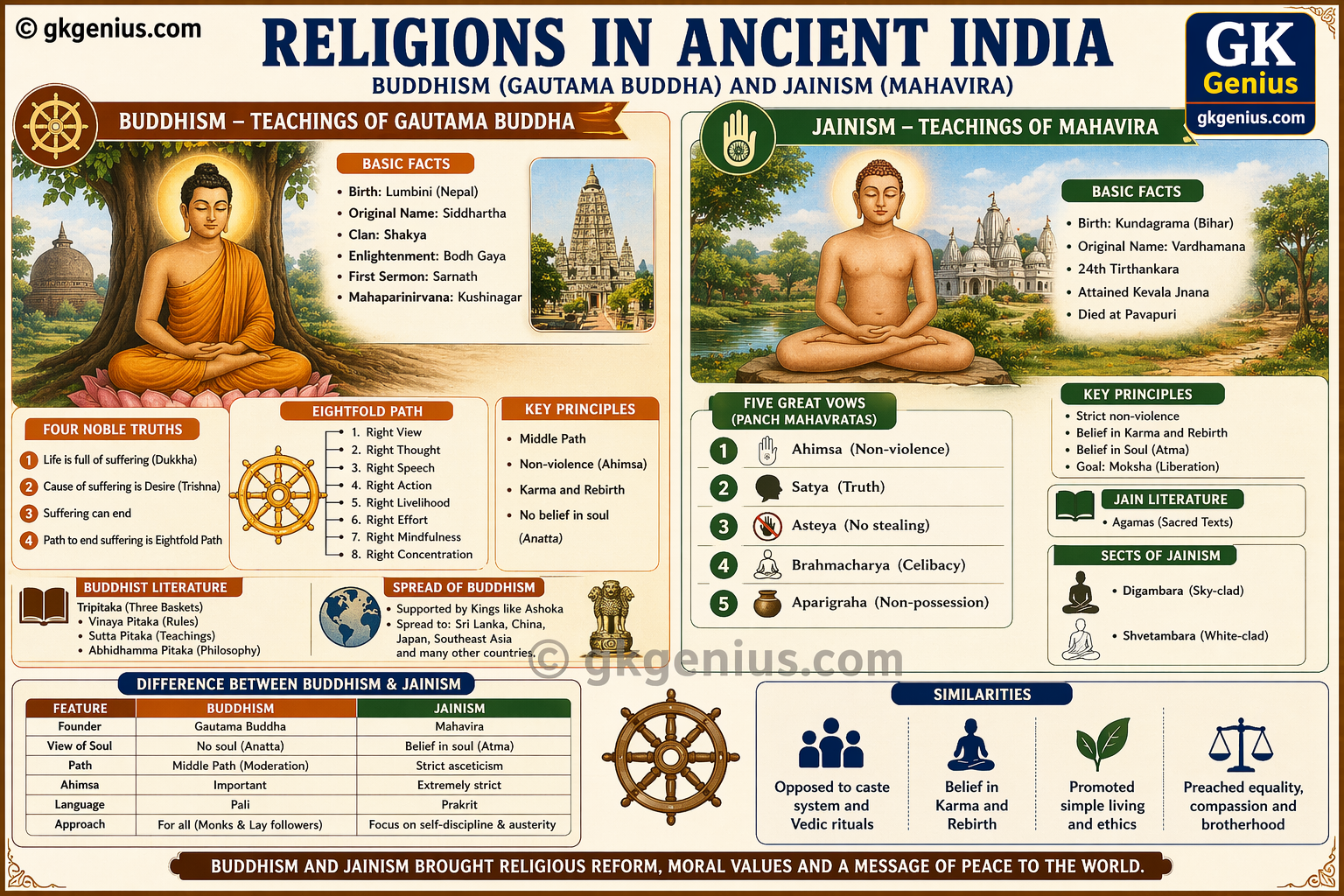
🏛️ Religions in Ancient India
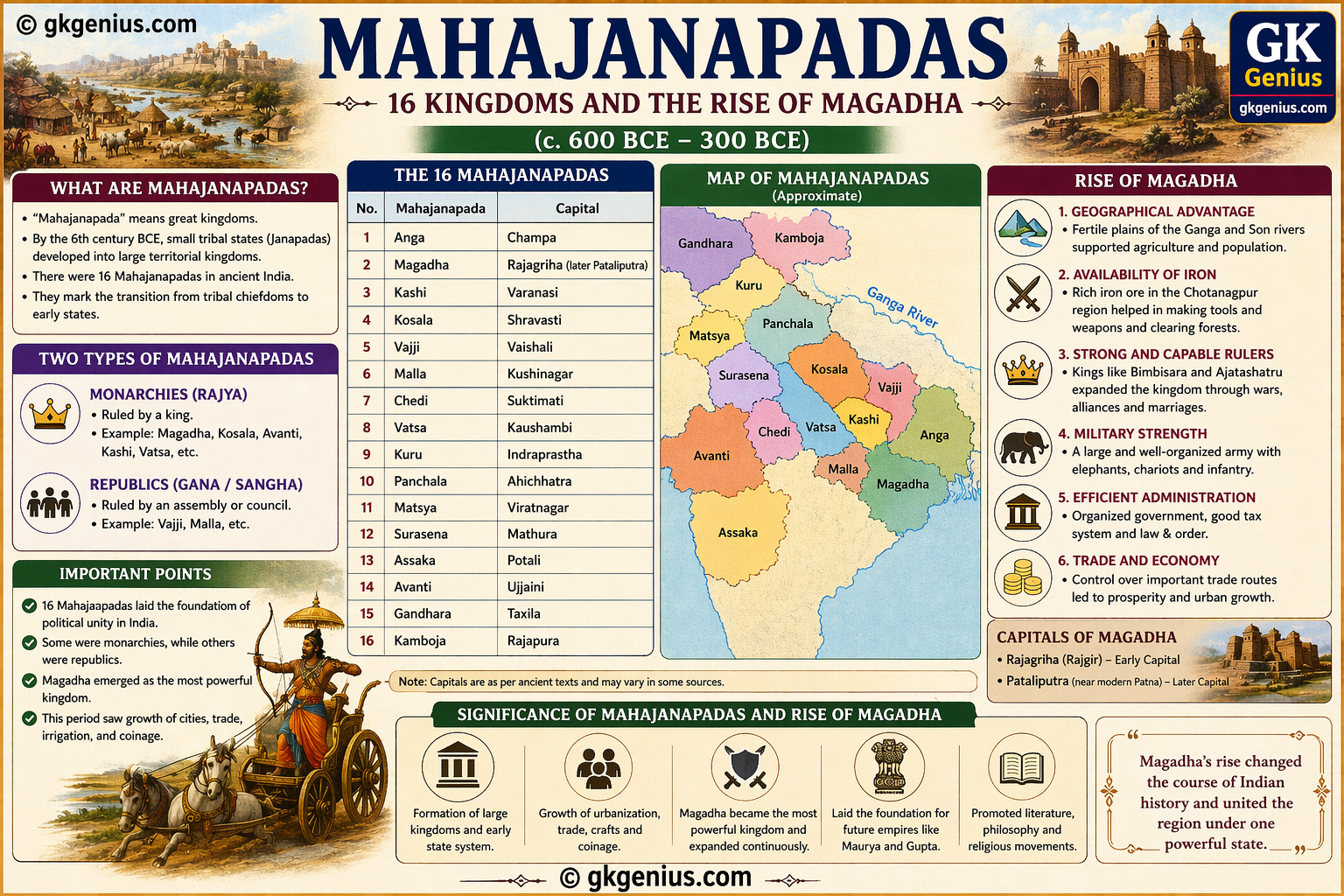
👉 Emerged during 6th century BCE (time of Mahajanapadas)👉 Reaction…
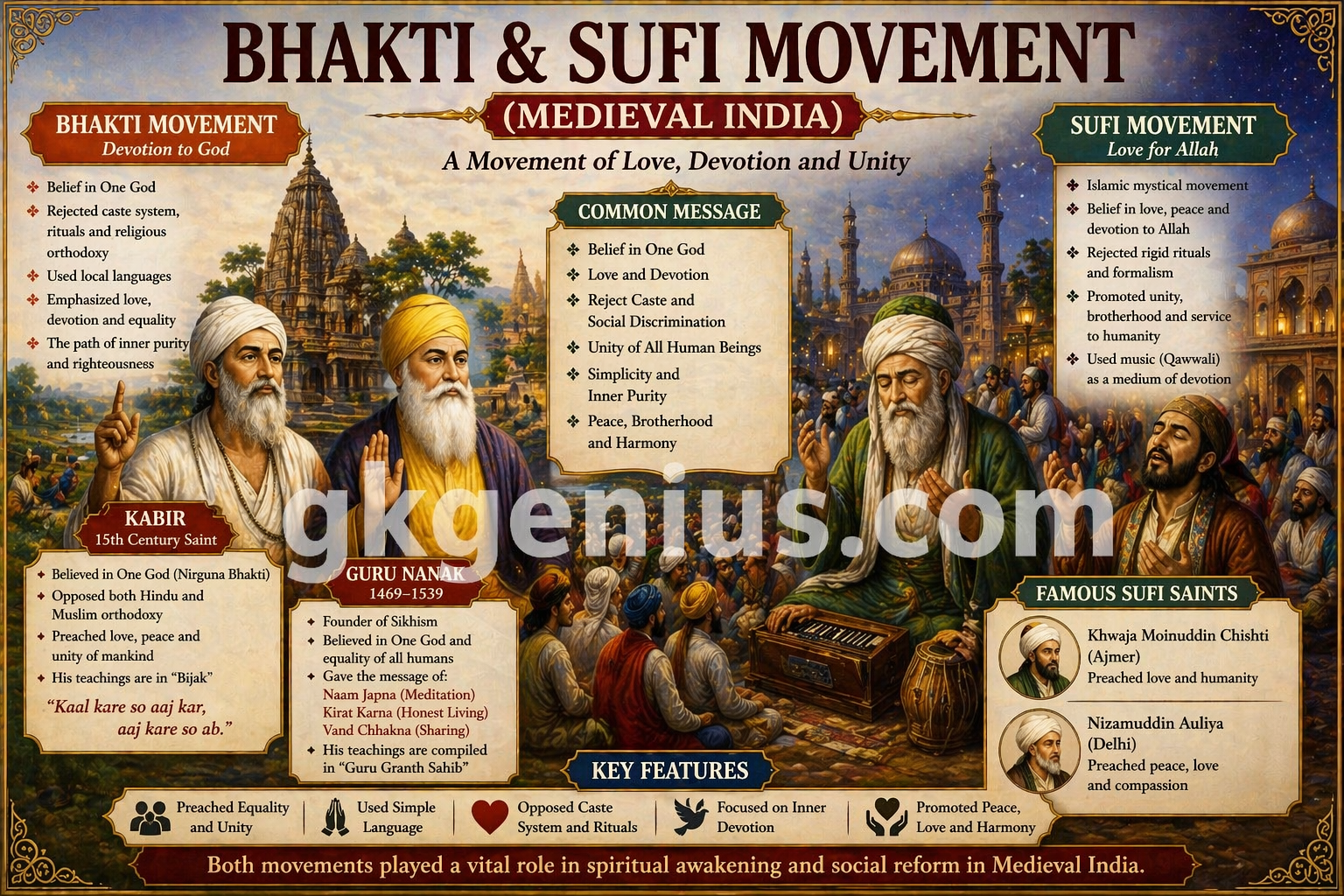
🕉️ Bhakti & Sufi Movement (Medieval India)
These movements emerged between the 12th–17th centuries to promote love,…