
19 April, 2026
0 Comments
1 category
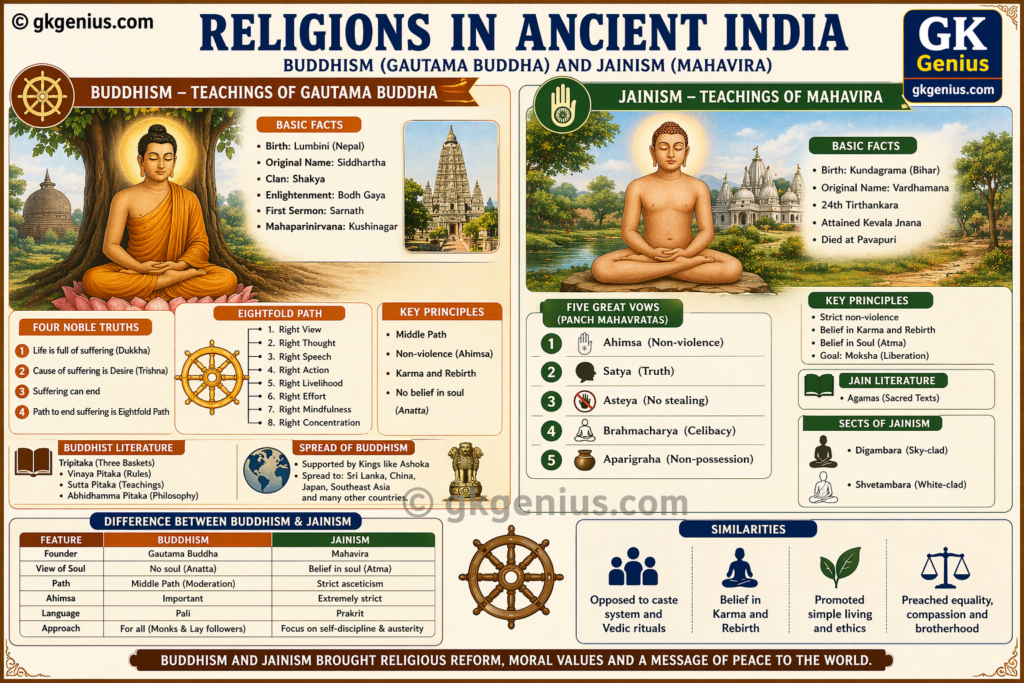
👉 Emerged during 6th century BCE (time of Mahajanapadas)
👉 Reaction against:
- Rigid caste system
- Complex rituals of Later Vedic period
☸️ Buddhism – Teachings of Gautama Buddha**
📍 Basic Facts
- Birth: Lumbini (modern Nepal)
- Original name: Siddhartha
- Clan: Shakya
- Enlightenment: Bodh Gaya
- First sermon: Sarnath
- Death (Mahaparinirvana): Kushinagar
🌟 Four Noble Truths (Core Teaching)
- Life is full of suffering (Dukkha)
- Cause of suffering = Desire (Trishna)
- Suffering can end
- Path to end suffering = Eightfold Path
🛤️ Eightfold Path
- Right View
- Right Thought
- Right Speech
- Right Action
- Right Livelihood
- Right Effort
- Right Mindfulness
- Right Concentration
🧘 Key Principles
- Middle Path (avoid extremes)
- Non-violence (Ahimsa)
- Karma & Rebirth
- No belief in soul (Anatta)
📚 Buddhist Literature
- Tripitaka (Three Baskets):
- Vinaya Pitaka (rules)
- Sutta Pitaka (teachings)
- Abhidhamma Pitaka
🏛️ Spread of Buddhism
- Supported by kings like:
- Ashoka
- Spread to:
- Sri Lanka, China, Japan, Southeast Asia
🕉️ Jainism – Teachings of Mahavira**
📍 Basic Facts
- Birth: Kundagrama (Bihar)
- Original name: Vardhamana
- 24th Tirthankara
- Attained Kevala Jnana (knowledge)
- Died at Pavapuri
🌟 Five Great Vows (Panch Mahavratas)
- Ahimsa (Non-violence)
- Satya (Truth)
- Asteya (No stealing)
- Brahmacharya (Celibacy)
- Aparigraha (Non-possession)
🧘 Key Principles
- Strict non-violence
- Belief in:
- Karma and rebirth
- Soul (Atma)
- Goal: Moksha (liberation)
📚 Jain Literature
- Agamas (sacred texts)
🏛️ Sects of Jainism
- Digambara (sky-clad)
- Shvetambara (white-clad)
🔄 Difference Between Buddhism & Jainism
| Feature | Buddhism | Jainism |
|---|---|---|
| Founder | Gautama Buddha | Mahavira |
| Soul | No soul (Anatta) | Belief in soul |
| Path | Middle Path | Strict asceticism |
| Ahimsa | Important | Extremely strict |
| Language | Pali | Prakrit |
✨ Similarities
- Both:
- Opposed caste system
- Rejected Vedic rituals
- Focused on karma and rebirth
- Promoted simple living and ethics
- Buddhism & Jainism brought:
- Religious reform
- Moral teachings
- Equality and simplicity
- Played a major role in shaping Indian philosophy and culture
Category: Recent Posts