
12 April, 2026
0 Comments
1 category
🔹 What is an Earthquake?
An earthquake is the sudden shaking or vibration of the Earth’s surface caused by the release of energy from within the Earth’s crust.
🔹 Causes of Earthquakes
1. Tectonic Causes (Main Cause)
- Due to movement of tectonic plates
- Occurs along plate boundaries (fault lines)
- Explained by Plate Tectonics
2. Volcanic Causes
- Occur due to volcanic eruptions
3. Human-Induced Causes
- Mining
- Reservoir construction
- Nuclear explosions
🔹 Key Terms
- Focus (Hypocenter): Point inside Earth where earthquake originates
- Epicenter: Point on Earth’s surface directly above the focus
- Seismic Waves: Energy waves that travel through Earth
🔹 Types of Seismic Waves
- P-Waves (Primary)
- Fastest
- Travel through solids, liquids, gases
- S-Waves (Secondary)
- Slower than P-waves
- Travel only through solids
- L-Waves (Surface Waves)
- Most destructive
- Travel on Earth’s surface
🔹 Measurement of Earthquakes
- Measured using Seismograph
- Magnitude scale: Richter Scale
- Intensity scale: Mercalli Scale
🔹 Effects of Earthquakes
- Loss of life and property
- Landslides
- Tsunami
- Soil liquefaction
- Damage to infrastructure
🔹 Earthquake Zones in India
India is divided into 4 seismic zones:
- Zone II – Low risk
- Zone III – Moderate
- Zone IV – High
- Zone V – Very high (e.g., Himalayas, Northeast)
🔹 Earthquake Management
- Construct earthquake-resistant buildings
- Disaster preparedness plans
- Early warning systems
- Public awareness
Category: Recent Posts
Related Posts

🏰 Maratha Empire (1674–1818)-Detailed Notes
The Maratha Empire was a powerful Indian kingdom that challenged…
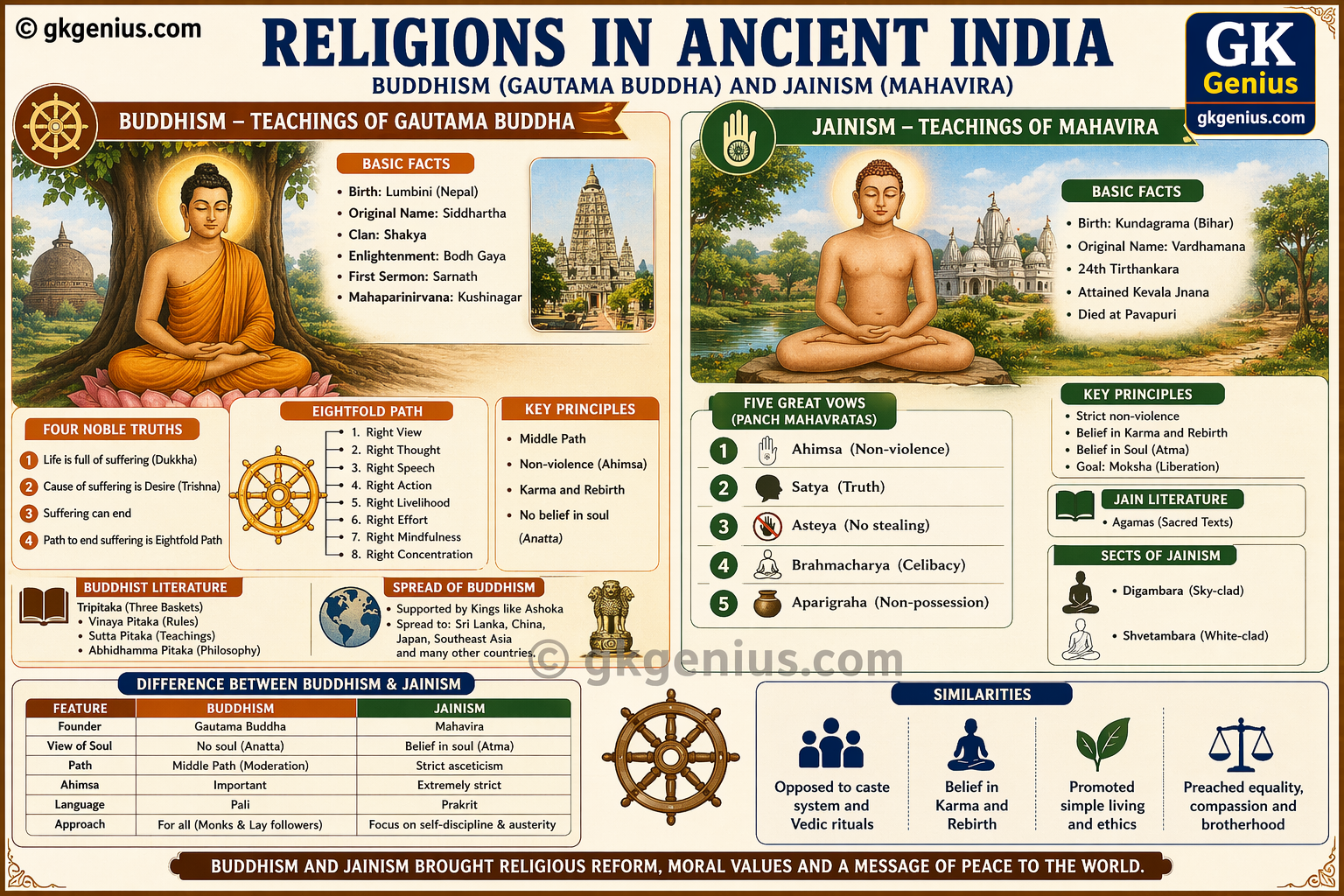
🏛️ Religions in Ancient India
👉 Emerged during 6th century BCE (time of Mahajanapadas)👉 Reaction…