
20 April, 2026
0 Comments
1 category
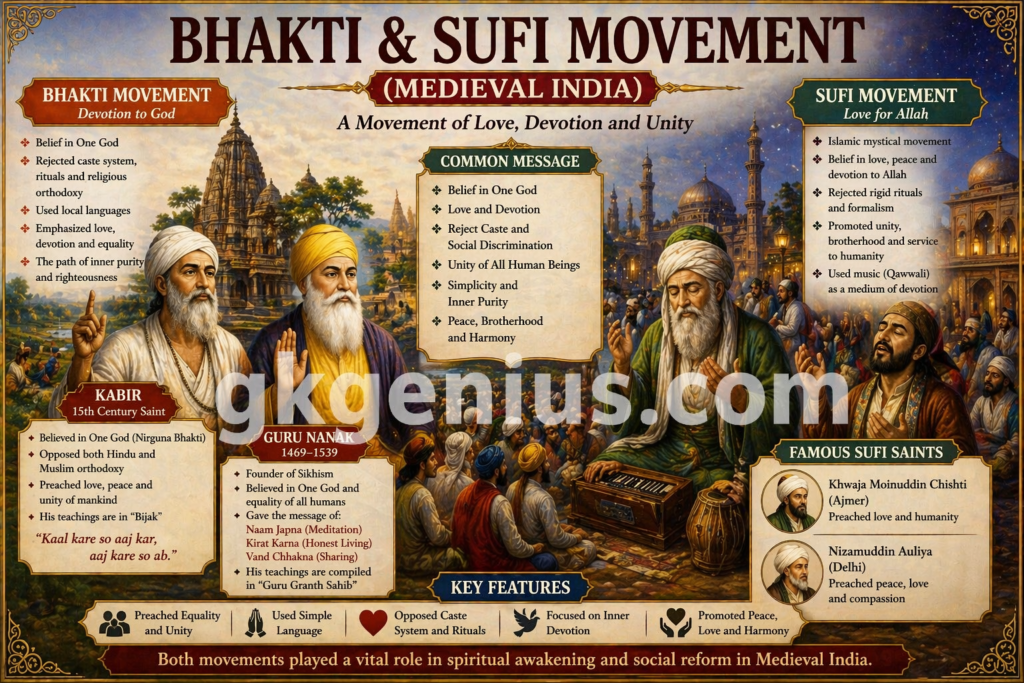
These movements emerged between the 12th–17th centuries to promote love, devotion, and unity beyond caste and religion.
🌼 Bhakti Movement
Key Features:
- Devotion (Bhakti) to one God
- Rejected caste system and rituals
- Emphasized equality and simplicity
- Used local languages for preaching
🔹 Kabir (15th Century)
Key Teachings:
- Believed in one God (Nirguna Bhakti)
- Opposed both Hindu and Muslim orthodoxy
- Focused on:
- Unity of God
- Inner devotion, not rituals
- His teachings are in 👉 Bijak
Famous Line:
👉 “Kaal kare so aaj kar, aaj kare so ab”
🔹 Guru Nanak (1469–1539)
Key Teachings:
- Founder of 👉 Sikhism
- Believed in:
- One God
- Equality of all humans
- Gave concept of:
- Naam Japna (meditation)
- Kirat Karna (honest living)
- Vand Chhakna (sharing)
- His teachings are compiled in 👉 Guru Granth Sahib
🌙 Sufi Movement
Key Features:
- Islamic mystical movement
- Focus on love, peace, and devotion to Allah
- Rejected strict rituals and formalism
- Promoted unity and brotherhood
🔹 Important Sufi Saints:
- Khwaja Moinuddin Chishti
- Nizamuddin Auliya
Teachings:
- Love all, serve all
- God can be reached through devotion and love
- Importance of music (Qawwali)
📌 Difference (Bhakti vs Sufi)
| Aspect | Bhakti Movement | Sufi Movement |
|---|---|---|
| Religion | Mainly Hindu | Islamic |
| Focus | Devotion to God | Mysticism & love |
| Language | Local languages | Persian/Urdu |
| Goal | Salvation (Moksha) | Union with God |
🎯 Exam Quick Points:
- Kabir → Nirguna Bhakti, unity of religions
- Guru Nanak → Founder of Sikhism
- Sufis → Love, peace, equality
- Both movements → Against caste & rituals
Category: Recent Posts
Related Posts
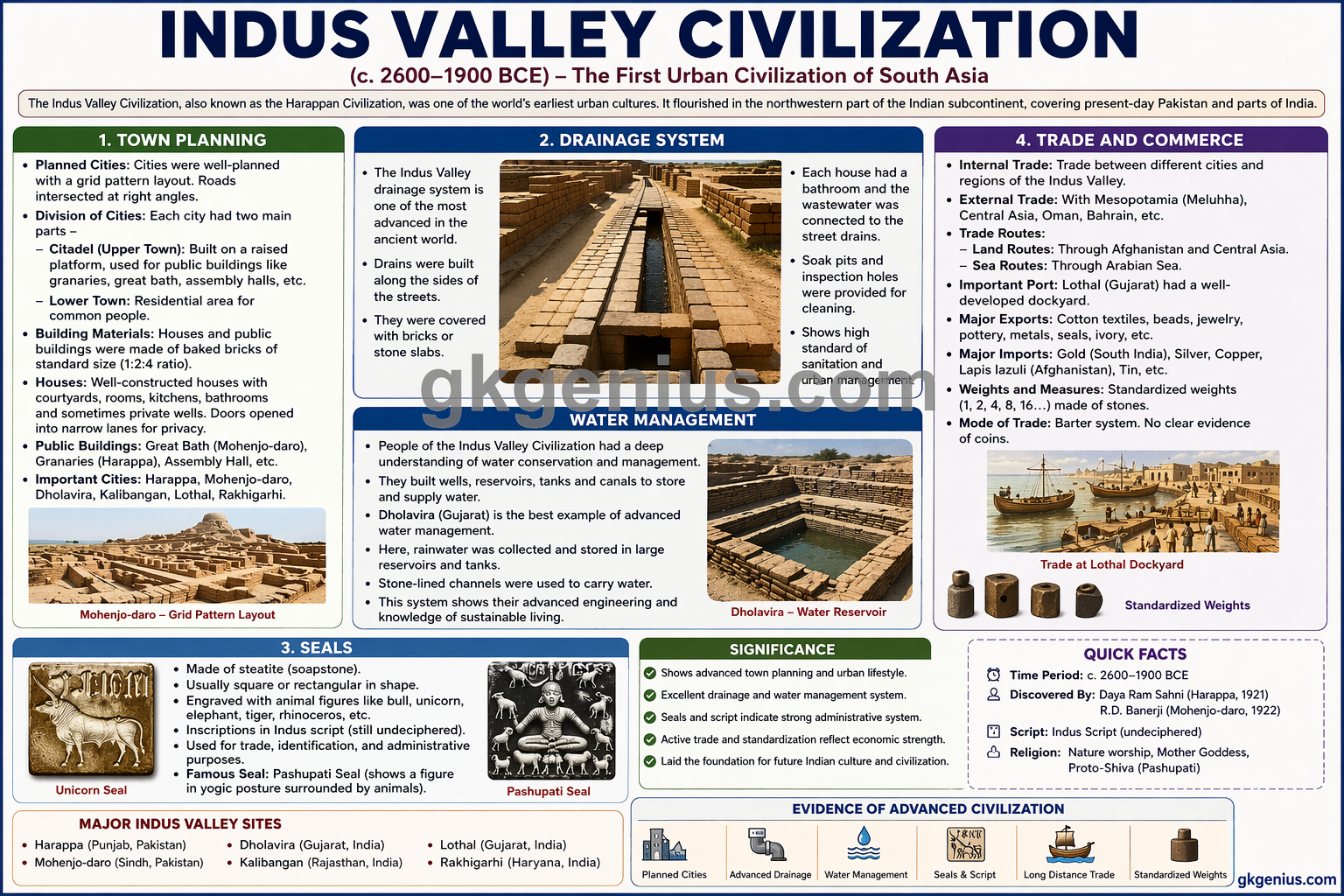
🏛️ Indus Valley Civilization – Notes
📍 1. Town Planning The Indus Valley Civilization is known…
💰 Top 100 Economy Questions
📊 Basic Economics (1–30) What is economics?👉 Study of production,…