
19 April, 2026
0 Comments
1 category
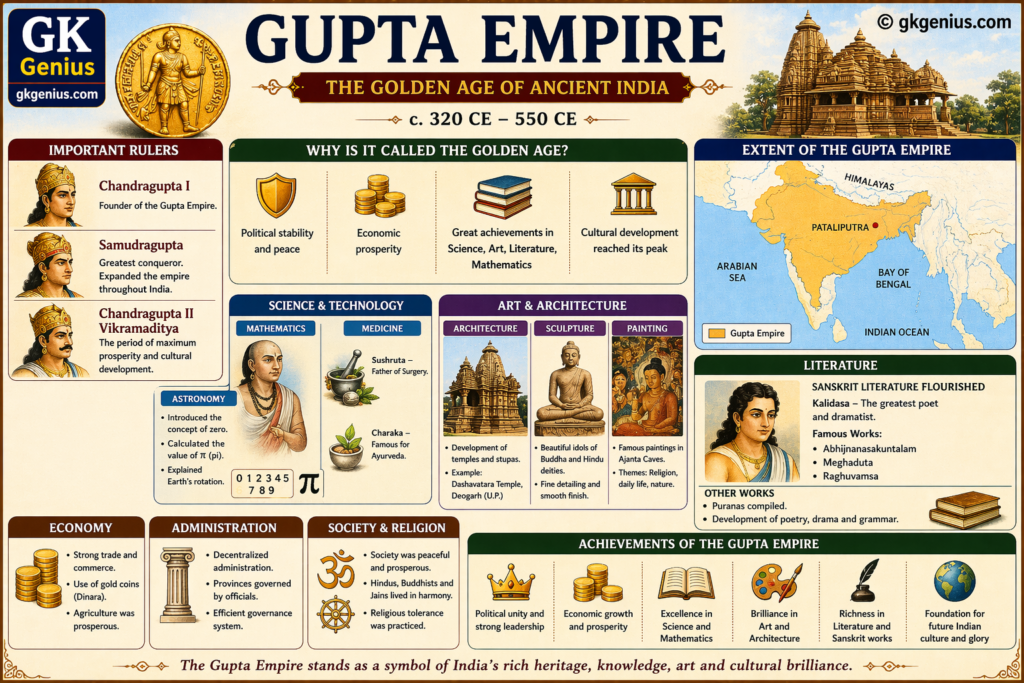
👉 Period: c. 320 CE – 550 CE
👉 Known as the “Golden Age of Ancient India”
👑 Important Rulers
- Chandragupta I – Founder
- Samudragupta – Greatest conqueror
- Chandragupta II – Period of prosperity
🌟 Why is it called the Golden Age?
- Political stability and peace
- Economic prosperity
- Great achievements in:
- Science
- Art
- Literature
- Mathematics
- Cultural development reached its peak
🔬 Science & Technology
🧮 Mathematics
- Aryabhata
- Introduced concept of zero
- Calculated value of π (pi)
- Explained Earth’s rotation
🩺 Medicine
- Sushruta
- Known as Father of Surgery
- Charaka
- Famous for Ayurveda
🌌 Astronomy
- Advanced knowledge of:
- Planets and eclipses
- Solar system
🎨 Art & Architecture
🏛️ Architecture
- Development of:
- Temples
- Stupas
- Example:
- Dashavatara Temple
🎨 Sculpture
- Beautiful idols of:
- Buddha
- Hindu gods
- Fine detailing and smooth finish
🎭 Painting
- Famous paintings at:
- Ajanta Caves
- Themes:
- Religion
- Daily life
📚 Literature
✍️ Sanskrit Literature Flourished
👑 Famous Writer:
- Kalidasa
- Works:
- Abhijnanasakuntalam
- Meghaduta
- Raghuvamsa
- Works:
📖 Other Works
- Puranas compiled
- Development of:
- Poetry
- Drama
- Grammar
💰 Economy
- Strong trade and commerce
- Use of gold coins (Dinara)
- Agriculture was prosperous
🏛️ Administration
- Decentralized administration
- Provinces governed by officials
- Efficient governance system
- The Gupta Empire represents:
- Peak of Indian culture and knowledge
- Major progress in science, art, and literature
- Truly deserves the title:
👉 “Golden Age of India”
🔄 Quick Revision Points
- Period: 320–550 CE
- Golden Age due to cultural & scientific growth
- Key figure: Aryabhata (Maths & Astronomy)
- Great writer: Kalidasa
- Famous site: Ajanta Caves
Category: Recent Posts