
20 April, 2026
0 Comments
1 category
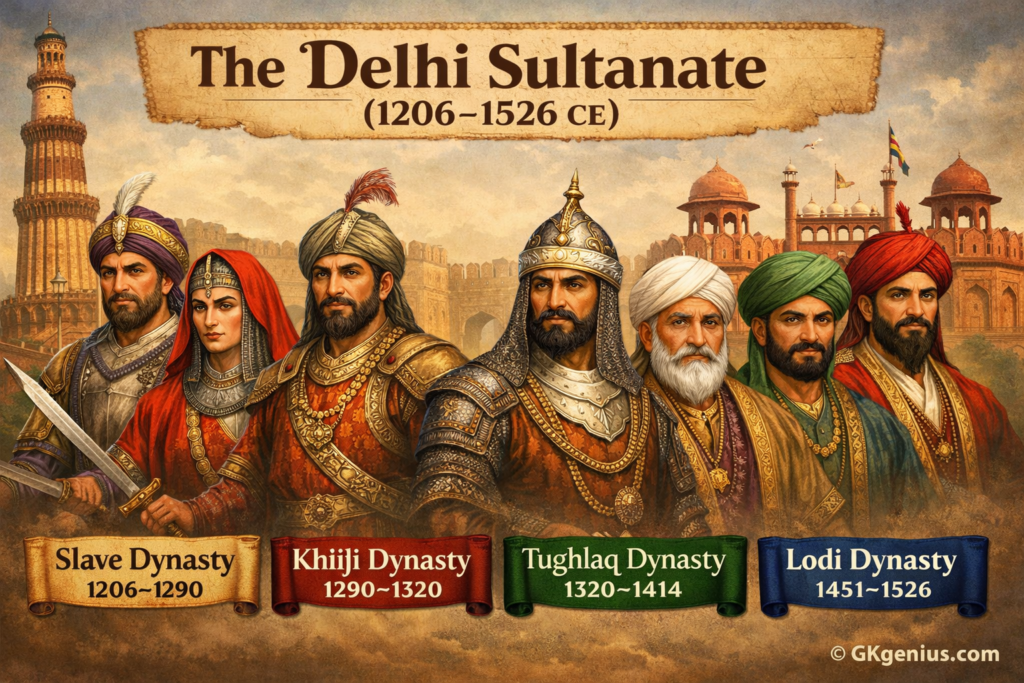
The Delhi Sultanate was a series of Muslim-ruled dynasties that ruled large parts of India from 1206 to 1526. It began after the decline of the Ghurid rule and ended with the rise of the Mughal Empire.
1️⃣ Slave Dynasty (Mamluk Dynasty) (1206–1290)
Key Rulers:
- Qutb-ud-din Aibak
- Iltutmish
- Razia Sultan
- Balban
Important Points:
- Founded by Qutb-ud-din Aibak in 1206
- Known as “Slave” dynasty because rulers were former slaves
- Iltutmish consolidated the Sultanate and introduced Iqta system
- Razia Sultan – first and only woman ruler of Delhi Sultanate
- Balban strengthened monarchy and introduced strict law and order
2️⃣ Khilji Dynasty (1290–1320)
Key Rulers:
- Jalal-ud-din Khilji
- Alauddin Khilji
Important Points:
- Founded by Jalal-ud-din Khilji
- Alauddin Khilji was the most powerful ruler
- Famous for:
- Market control system (price control)
- Strong army and defense against Mongols
- Expansion into South India
3️⃣ Tughlaq Dynasty (1320–1414)
Key Rulers:
- Ghiyas-ud-din Tughlaq
- Muhammad bin Tughlaq
- Firoz Shah Tughlaq
Important Points:
- Founded by Ghiyas-ud-din Tughlaq
- Muhammad bin Tughlaq known for ambitious but failed experiments:
- Transfer of capital (Delhi to Daulatabad)
- Token currency system
- Firoz Shah Tughlaq focused on welfare:
- Built canals, gardens, and cities
- Period marked by decline due to weak rulers
4️⃣ Lodi Dynasty (1451–1526)
Key Rulers:
- Bahlul Lodi
- Sikandar Lodi
- Ibrahim Lodi
Important Points:
- First Afghan dynasty in India
- Sikandar Lodi improved administration and agriculture
- Ibrahim Lodi was defeated by Babur in the
👉 First Battle of Panipat - This marked the end of Delhi Sultanate and beginning of Mughal rule
📌 Summary Table
| Dynasty | Period | Founder | Key Feature |
|---|---|---|---|
| Slave | 1206–1290 | Qutb-ud-din Aibak | Strong foundation |
| Khilji | 1290–1320 | Jalal-ud-din Khilji | Economic reforms |
| Tughlaq | 1320–1414 | Ghiyas-ud-din | Experiments & decline |
| Lodi | 1451–1526 | Bahlul Lodi | Afghan rule, end of Sultanate |
Category: Recent Posts