
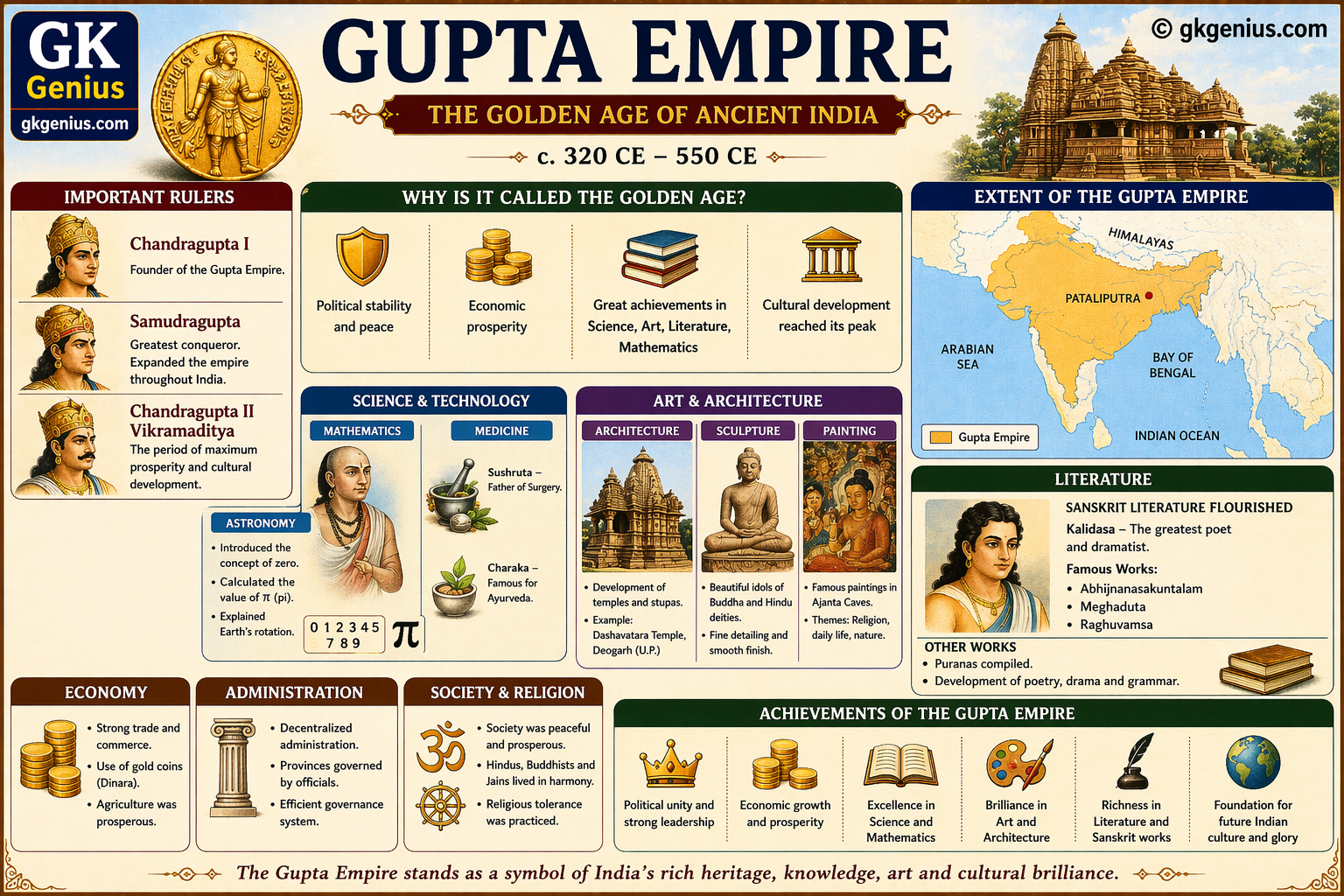
🏛️ Gupta Empire – Detailed Notes
👉 Period: c. 320 CE – 550 CE👉 Known as the “Golden Age of Ancient India” 👑 Important Rulers 🌟 Why is it called the Golden Age? 🔬 Science & Technology 🧮 Mathematics 🩺 Medicine
👉 Period: c. 320 CE – 550 CE👉 Known as the “Golden Age of Ancient India” 👑 Important Rulers 🌟 Why is it called the Golden Age? 🔬 Science & Technology 🧮 Mathematics 🩺 Medicine
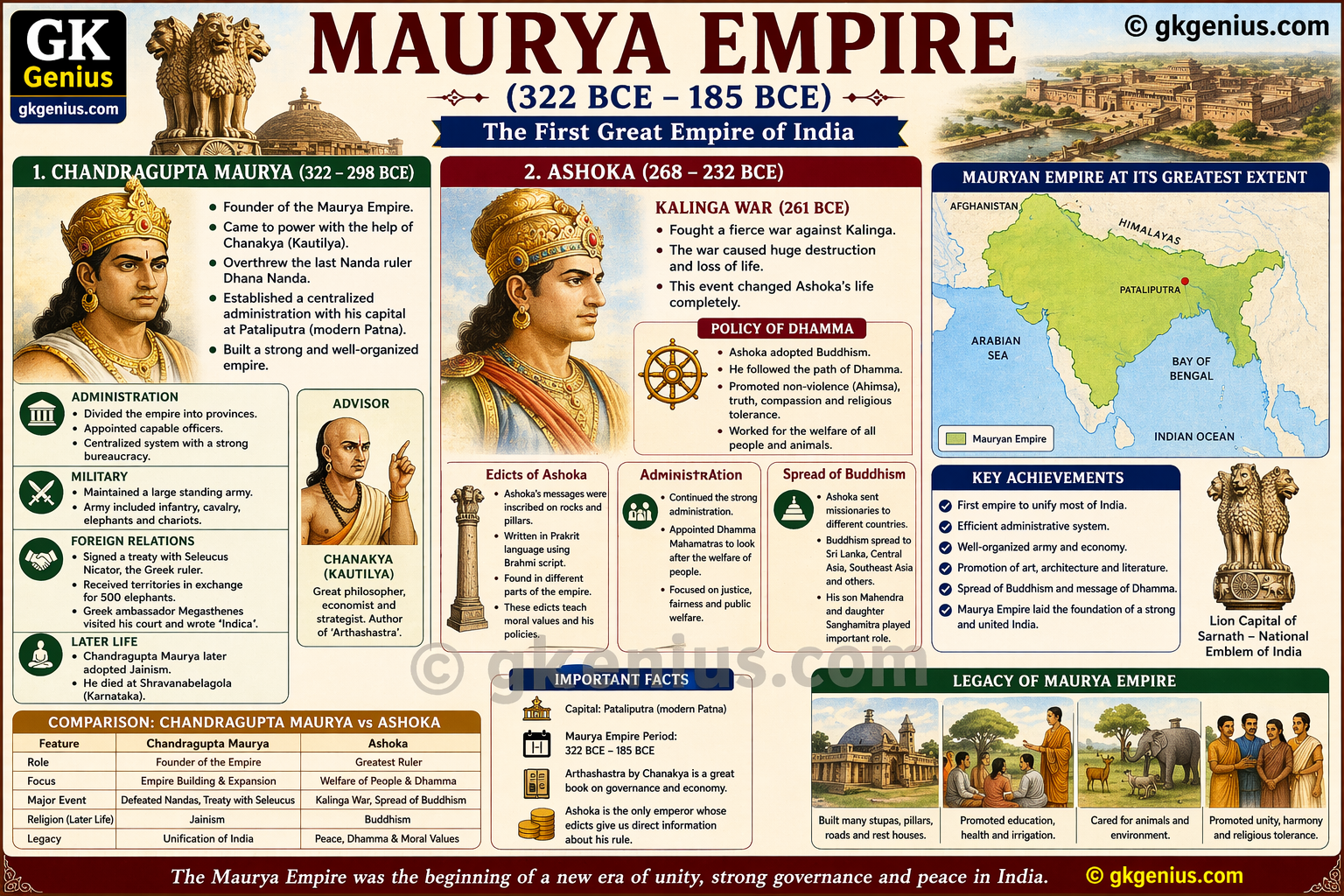
👉 Period: 322 BCE – 185 BCE👉 First large empire to unify most of India 👑 1. Chandragupta Maurya 📍 Basic Facts 🏛️ Administration 🛡️ Military 🌍 Foreign Relations 🧘 Later Life 👑 2. Ashoka
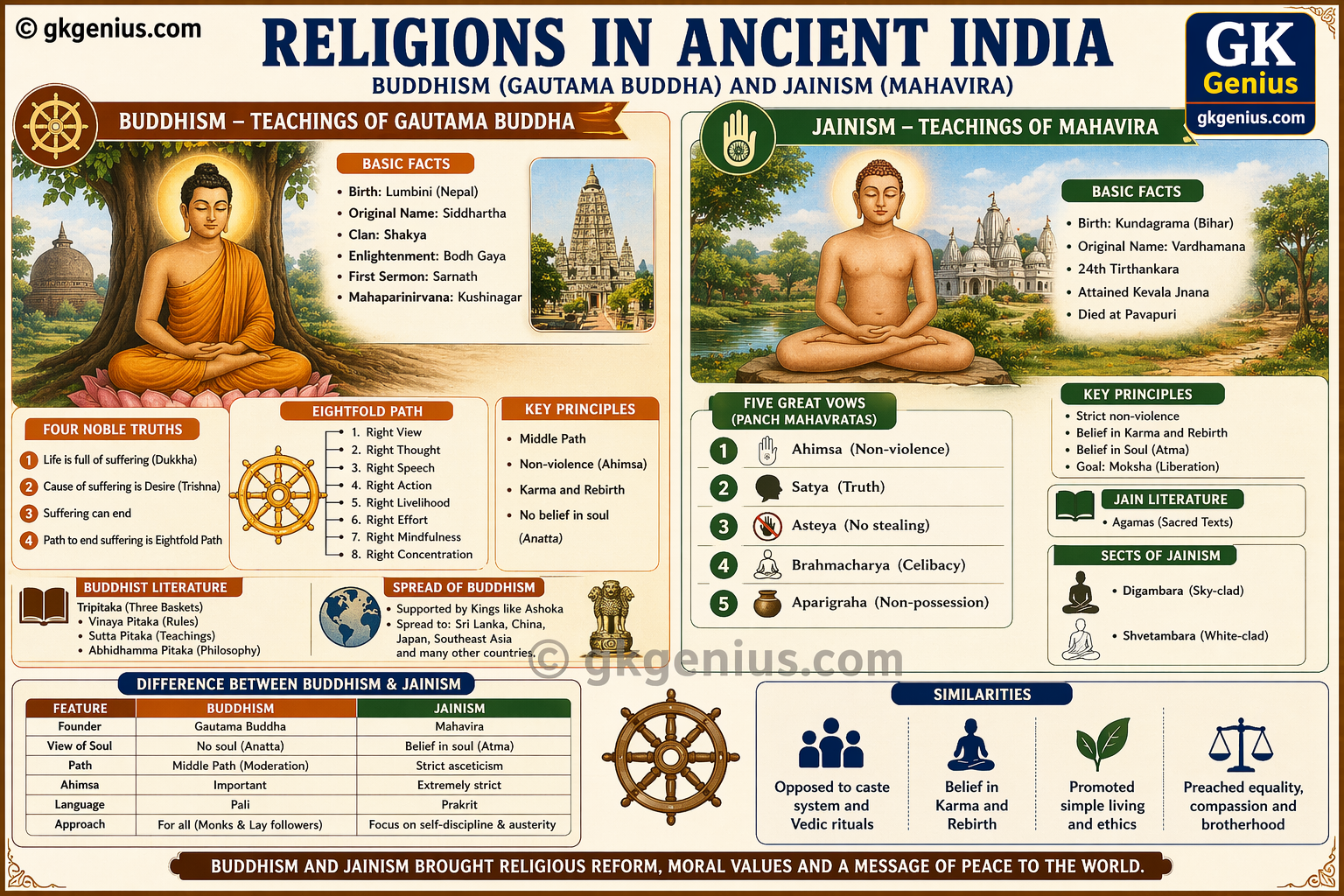
👉 Emerged during 6th century BCE (time of Mahajanapadas)👉 Reaction against: ☸️ Buddhism – Teachings of Gautama Buddha** 📍 Basic Facts 🌟 Four Noble Truths (Core Teaching) 🛤️ Eightfold Path 🧘 Key Principles 📚 Buddhist
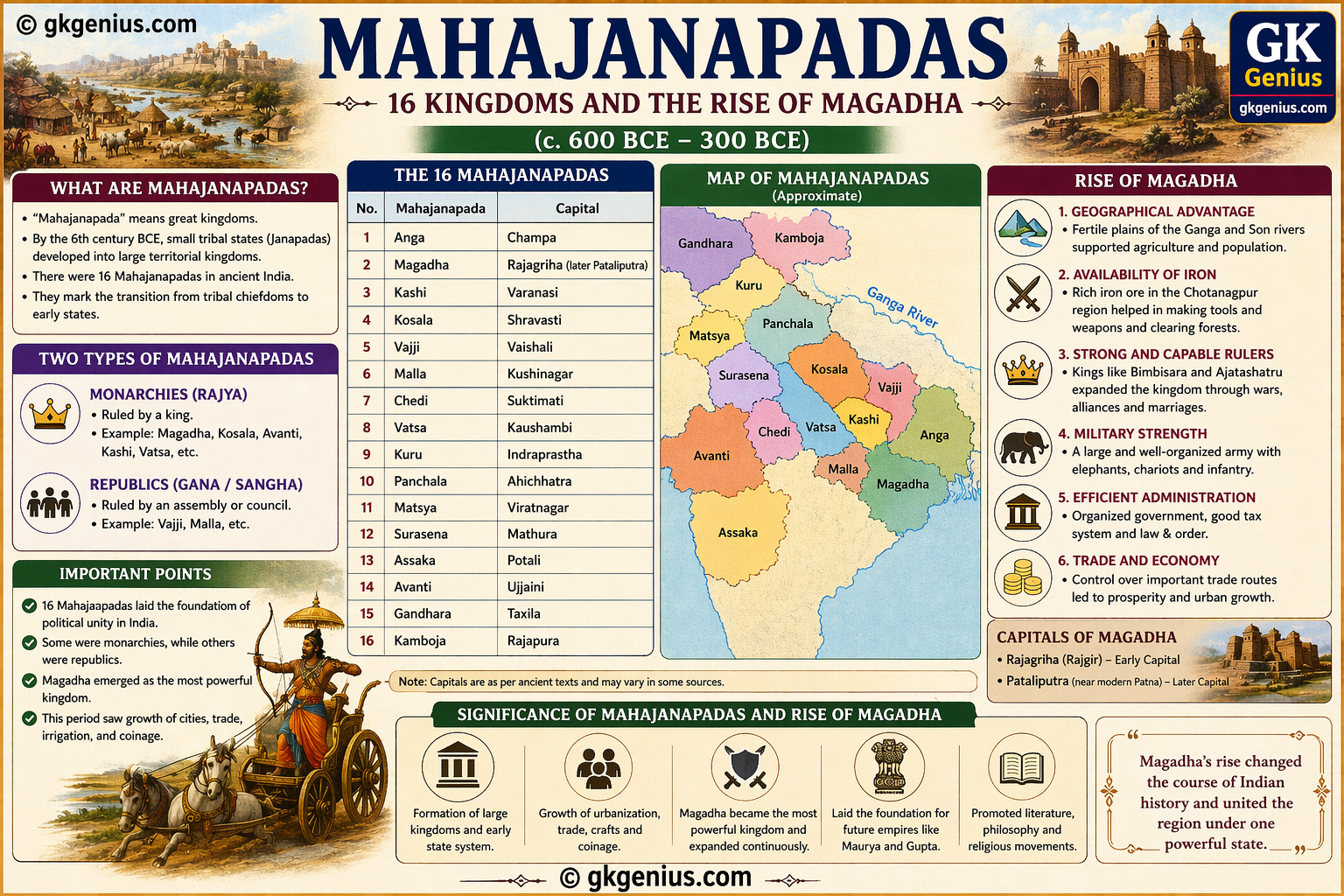
👉 Period: 600 BCE – 300 BCE👉 Transition phase from Vedic Period to early states 📍 What are Mahajanapadas? 🗺️ 16 Mahajanapadas (Important for Exams) Mahajanapada Capital Anga Champa Magadha Rajagriha (later Pataliputra) Kashi Varanasi
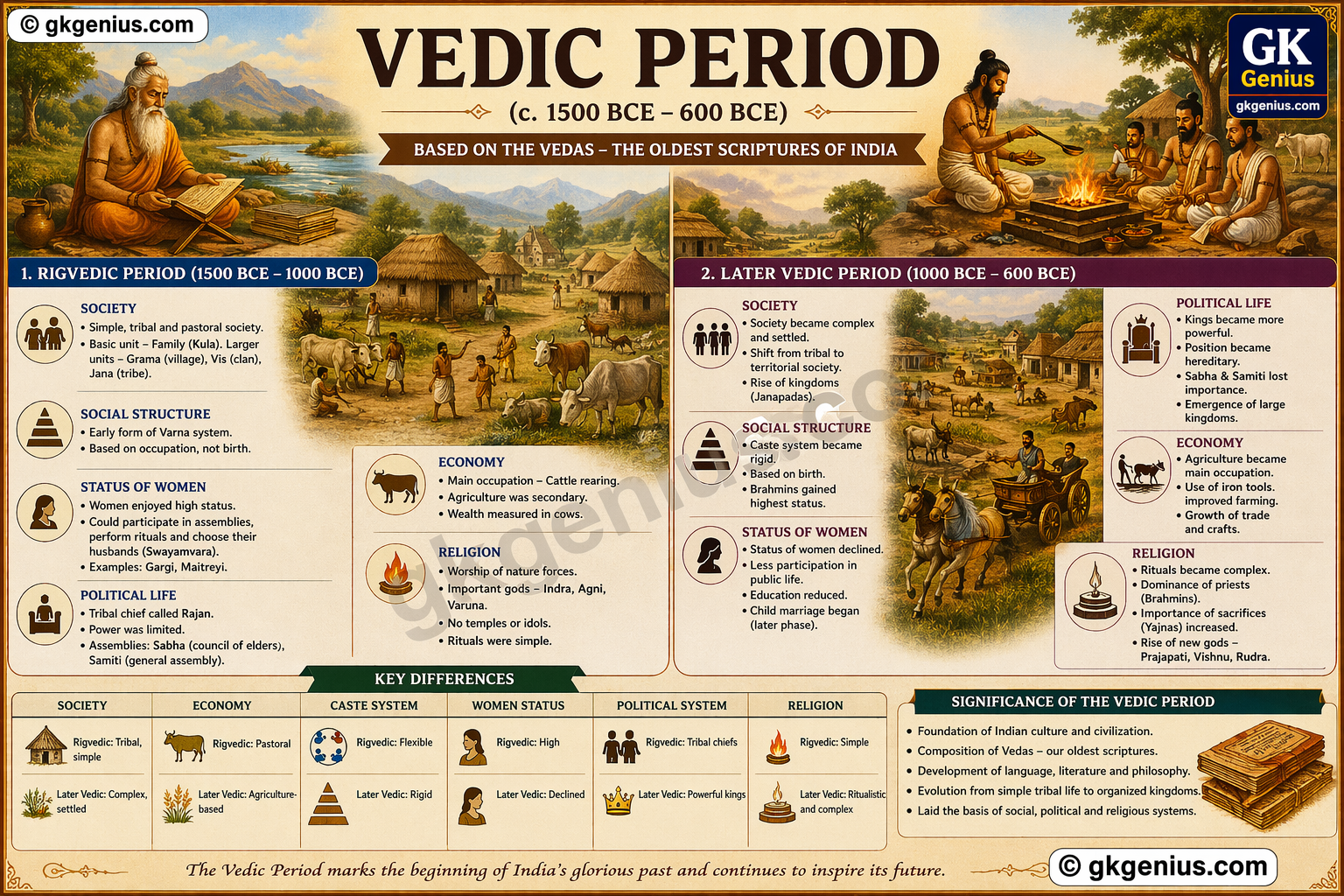
👉 Time Period: 1500 BCE – 600 BCE👉 Source: Vedas 📖 1. Rigvedic Period (Early Vedic Period) 👉 Time: 1500 BCE – 1000 BCE👉 Main Text: Rigveda 🏠 Society 👨👩👧 Social Structure 👩 Status of
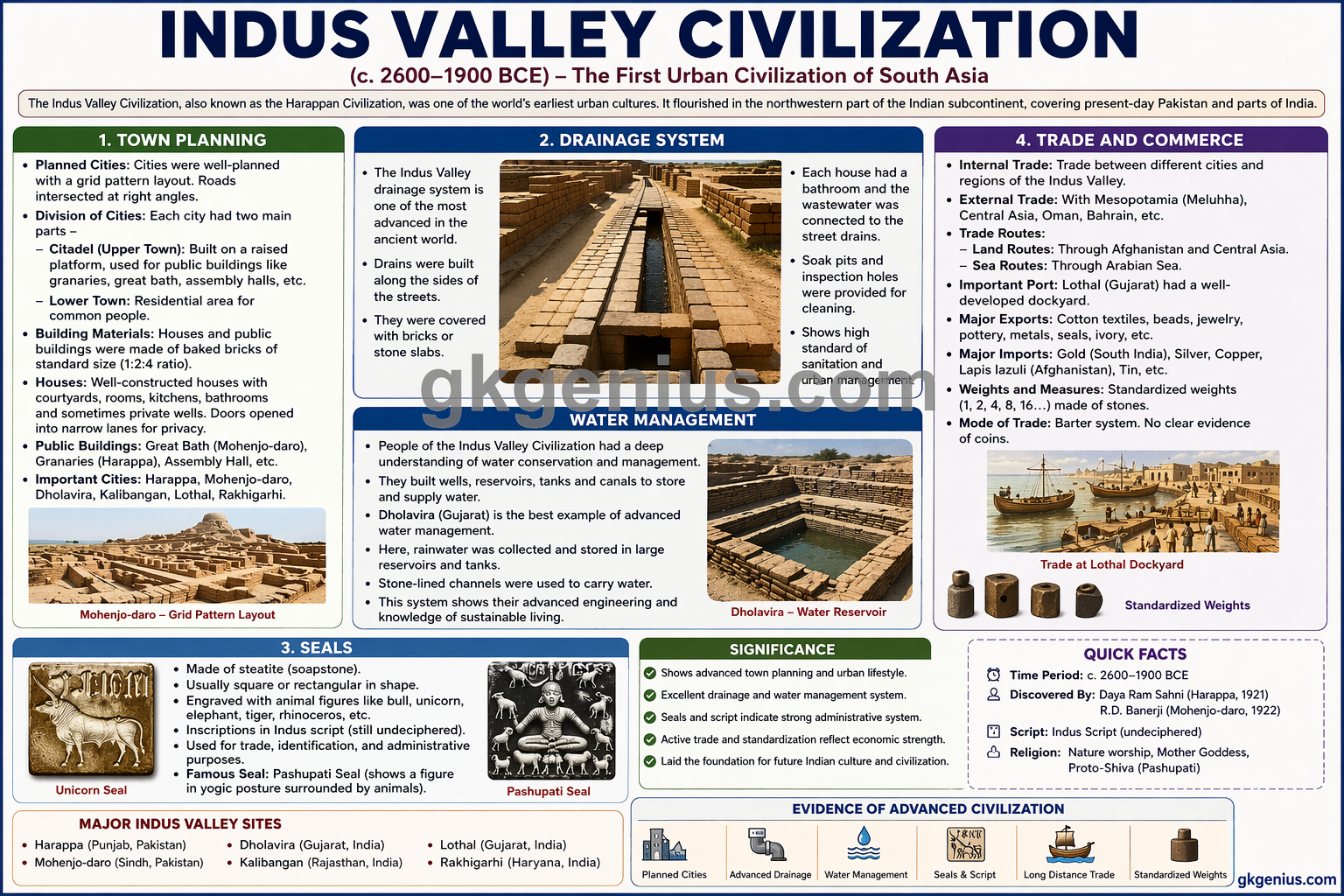
📍 1. Town Planning The Indus Valley Civilization is known for its remarkably advanced urban planning, unmatched in many contemporary civilizations. 🔹 Key Features: 🔹 Significance: 🚰 2. Drainage System The drainage system of the